
The Dawn of a $60 Trillion Digital Platform Era
By 2028, the global digital platform economy is projected to surpass a staggering $60 trillion. This isn't just a headline; it's a fundamental reshaping of how industries deliver value, and nowhere is the transformation more profound than in healthcare. Subscription-based digital services are growing more than three times faster than traditional models, fueling a revolution where AI, clinical datasets, and connected devices converge. For frontend developers, this presents both an unprecedented opportunity and a daunting challenge: how do you build user interfaces that are not only precise and data-rich but also developed at lightning speed to keep pace with this growth?
At events like the India AI Impact Summit 2026, industry leaders like Philips are demonstrating how AI and platform-based innovation are already transforming healthcare. The integration of large-scale clinical, biomarker, and digital datasets isn't just enhancing research; it's enabling personalized care at a level previously unimaginable. However, the jump from data to actionable interface remains the critical bottleneck. Developers are often stuck manually coding complex dashboards, patient portals, and monitoring tools, wasting hundreds of hours on repetitive UI work.
The Healthcare UI Challenge: Accuracy vs. Speed
Consider the requirements of a modern clinical decision support system. It must display real-time vital signs, integrate 3D imaging outputs, and offer predictive analytics, all while maintaining strict accessibility and performance standards. A recent study showed that a 3D convolutional network achieved more than 73% classification accuracy when augmented with clinical features. But translating that model's output into a clinician-friendly interface still relies heavily on frontend implementation. The gap between ML accuracy and UI quality is often where projects stall.

Meanwhile, the venture capital pouring into health tech and digital health underscores the urgency. Fierce Healthcare continuously tracks billions being funneled into startups that promise to streamline patient engagement and clinical workflows. These startups need to launch MVPs with pixel-perfect interfaces in weeks, not months. Traditional manual coding simply doesn't scale.
“The ability to instantly copy and customize complex UI components from any healthcare platform changes the game, it turns days of development into minutes.”
That's where intelligent UI tools enter the picture. Imagine a browser extension that lets you copy any UI element from any website, be it a patient data grid, an advanced chart component, or a telemedicine dashboard, and directly convert it into clean, reusable code. DivMagic does exactly that. Instead of starting from scratch, developers can capture the exact UI patterns proven in successful healthcare platforms and integrate them into their own projects, drastically slashing development time.
How Efficiency Transcends Industries: Lessons from Manufacturing
Surprisingly, the same principle of high-speed, platform-driven efficiency is also being applied in manufacturing. Komax Group, a leader in automated wire processing, helps customers reduce wiring time by up to 80%. That figure is a testament to what digital automation can achieve. Just as Komax removes repetitive manual tasks from wiring harness production, DivMagic removes repetitive manual tasks from UI coding.
| Approach | Time to Build | Quality Consistency | Reusability |
|---|---|---|---|
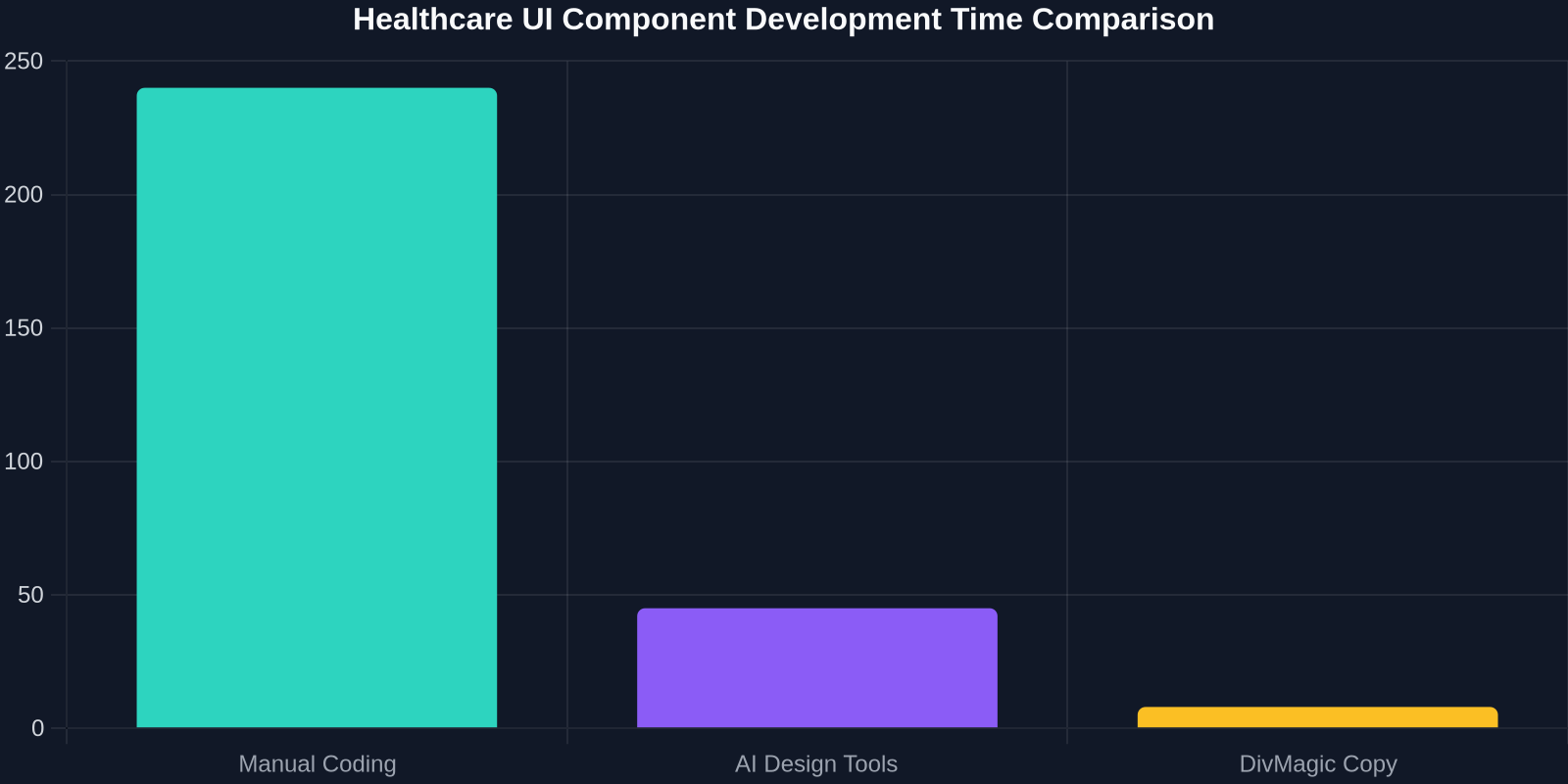
| Manual HTML/CSS | 2–4 hours per component | Variable | Low |
| AI Design Generators | 30–60 minutes | Moderate | Moderate |
| DivMagic Copy & Customize | 5–10 minutes | Pixel-perfect | High |
The table above illustrates a critical productivity delta. While AI design tools have improved, they often produce generic, hard-to-edit code. Manually coding a sophisticated UI element like a patient vitals monitor still takes several hours. With DivMagic, a developer can capture an existing polished component, style it exactly as needed, and have production-ready code in under ten minutes. That's a time saving of over 95%.
Riding the Subscription and Data Wave
Subscription-based digital health services are growing 3x faster than traditional ones. This model depends on continuously updated, engaging interfaces that retain users. For a telehealth app, for instance, the UI needs to evolve rapidly based on user feedback. The traditional development cycle of designing in Figma, coding manually, and testing is too slow. Developers need the agility to directly import working UI components from leading platforms, tweak them, and deploy.

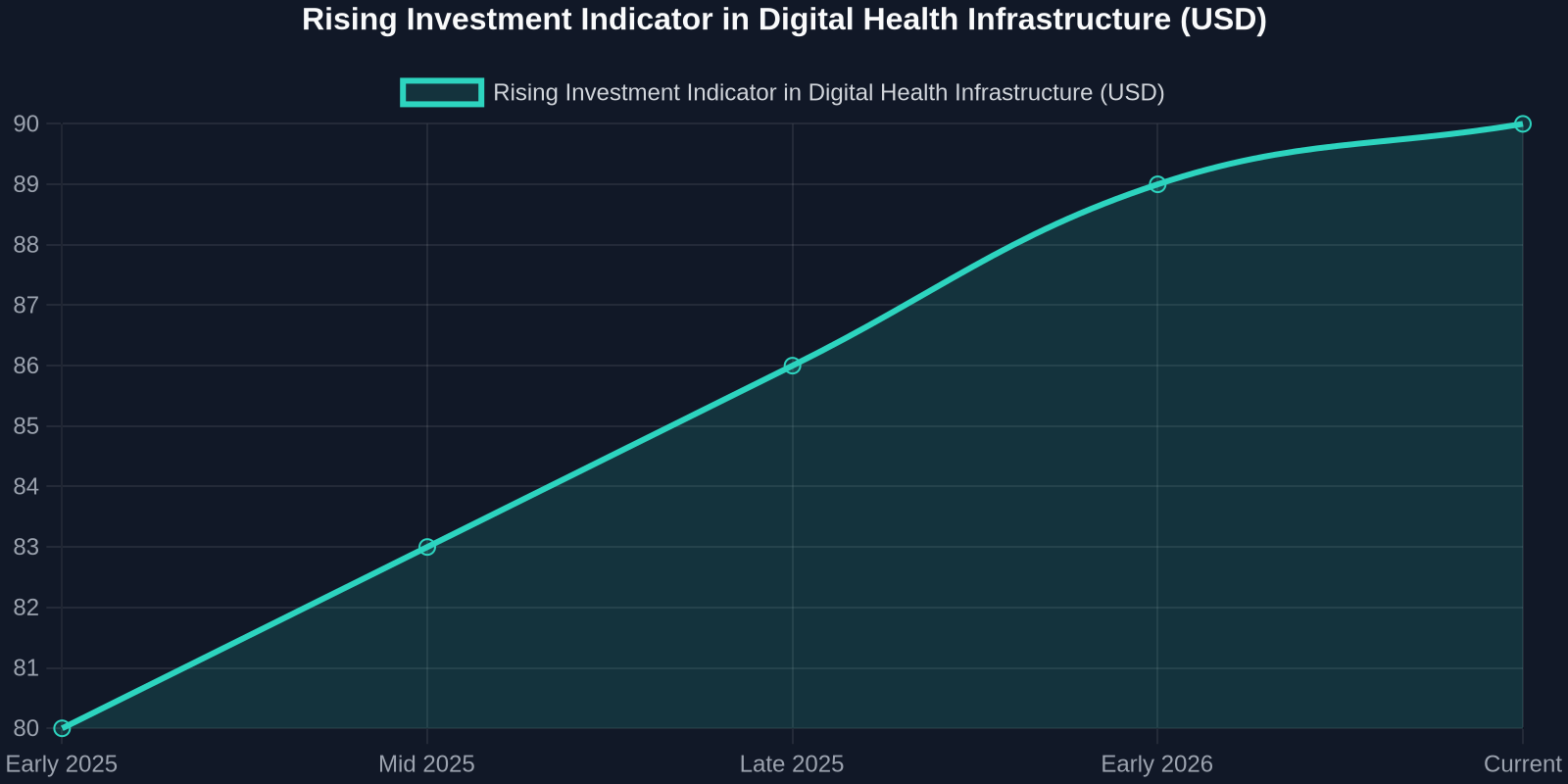
At the same time, the cost of technology adoption often signals market maturity. One long-term indicator, which has ground steadily higher from roughly US$80 in early 2025 to around US$90 currently, suggests rising investment and valuation in digital health infrastructure. As the price of these platforms climbs, the pressure to deliver a flawless user experience intensifies. A subpar UI can instantly erode trust in a healthcare product.
From Copy to Custom: The DivMagic Workflow
DivMagic isn't just about copying static designs. It captures the underlying HTML and CSS, which developers can then refine using their own code standards. Need to extract a complicated medication administration record table? Copy it from a reference site. Want to replicate an interactive symptom checker? Its nested components can be captured individually. The result is a semantic, maintainable codebase that doesn't carry the bloat of typical design-to-code converters.
Furthermore, because healthcare UIs often need to meet stringent regulatory guidelines (HIPAA, WCAG accessibility), starting with a proven, real-world implementation gives a significant compliance head start. You're not guessing whether a color contrast ratio works, you're copying something that already passes accessibility tests and then verifying it in your own environment.
Personalization at Scale Through Better UI
The talk at the India AI Impact Summit highlighted how integrating clinical, biomarker, and digital datasets can lead to more personalized care. For the frontend, this means building interfaces that intelligently expose different data layers to different user types, patients see a simplified view, while clinicians see deep analytics. Replicating such adaptive UIs manually is complex. DivMagic allows developers to study and clone these adaptive patterns from live applications, ensuring that personalization logic isn't held back by UI development speed.

The Future Is Platform-Driven, UI-First
As the digital platform economy marches toward $60 trillion, the winners will be those who can iterate on user interfaces at the speed of thought. Healthcare, with its mix of life-critical data and human-centered design, is the ultimate proving ground. By automating the most tedious part of frontend development, translating design to code, DivMagic empowers developers to focus on innovation, not repetition. Whether it's a 73%-accurate 3D imaging tool or an 80% faster wiring system in a smart factory, the principle is the same: copying excellence accelerates progress.
“Stop writing every pixel from scratch. Start building on the shoulders of the best digital platforms.”
In a landscape where subscription services are exploding and every week counts, the ability to instantly capture and adapt world-class UI from anywhere is no longer a luxury, it's a competitive necessity. Embrace the platform revolution, and turn your UI workflow from a bottleneck into your strongest asset.