
Tailwind CSS vs Bootstrap 2026: The Ultimate Comparison for Developers

Tailwind CSS vs Bootstrap 2026: Which CSS Framework Should You Choose?
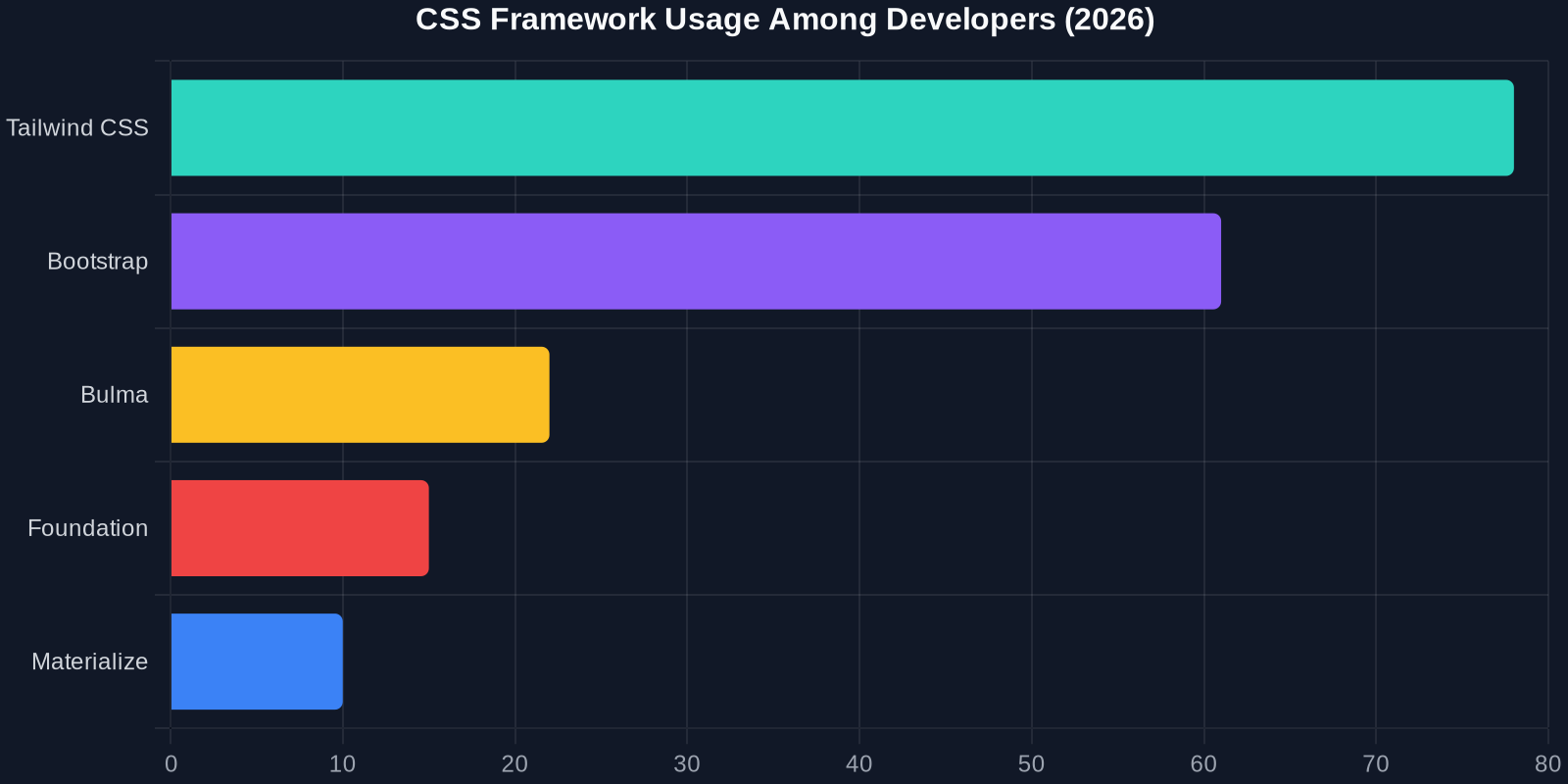
Are you torn between Tailwind CSS and Bootstrap for your next project in 2026? The debate between utility-first CSS and component-based frameworks has dominated frontend discussions for years. According to the 2025 State of CSS Report, 78% of developers now use Tailwind CSS, while Bootstrap holds steady at 61% usage. But the choice involves more than just popularity—it impacts everything from development speed to long-term maintenance. Let's dive deep into the latest stats, real-world performance comparisons, and expert insights to help you decide.
The Battle of Philosophy: Utility-First vs Component-Based
Bootstrap, created by Twitter engineers in 2011, popularized component-based CSS. You get pre-built components like cards, navbars, and modals that work out of the box. Tailwind CSS, launched in 2017, introduced a utility-first approach where you compose designs using small, single-purpose classes like flex, bg-blue-500, and text-center.
Bootstrap 2026: The Evolution of Components
Bootstrap 5.3 introduced custom CSS properties and improved utility classes. But the core philosophy remains: grab a component, customize it with Sass variables, and ship fast.
Tailwind CSS 2026: The Rise of Utility-First
Tailwind CSS v4.0 in 2026 brings the new @tailwind directive, JIT (Just-In-Time) compilation, and first-class dark mode support. The ecosystem includes Headless UI, Tailwind UI, and Tailwind Play for rapid prototyping.
Performance and Bundle Size
In 2026, performance is critical. Let's compare raw numbers:

Atomic CSS utilities eliminate dead code and make performance predictable. That's why modern frameworks are moving that direction.
— Sarah Drasner, VP of Engineering at Netlify (pullquote)
Learning Curve: Which is Easier for Beginners?
Bootstrap has a gentler learning curve due to its pre-built components. You can create a responsive navbar by copying one HTML snippet. Tailwind requires understanding utility classes and composing them together.
Customization and Design Flexibility
Tailwind CSS Customization

Tailwind's tailwind.config.js gives you complete control over color palettes, spacing, typography, and breakpoints.
module.exports = {
  theme: {
    extend: {
      colors: {
        'brand-blue': '#1F2A44',
      },
      spacing: {
        '18': '4.5rem',
        '22': '5.5rem',
      },
    },
  },
}
Bootstrap Customization
Bootstrap uses Sass variables, which are compiled into CSS. You can override them, but it's less dynamic:
$primary: #1F2A44;
$enable-shadows: true;
Which Framework Should You Choose in 2026?
Here's a decision framework:
Choose Tailwind CSS if:
- Custom design is your priority
- Performance matters for every page
- You use a component-based JS framework (React, Vue, Svelte)
- You want to avoid CSS debt
Choose Bootstrap if:
- You need rapid prototyping with minimal custom CSS
- You're building simple websites or admin panels
- Your team prefers stable, predictable components
- Accessibility requirements are strict
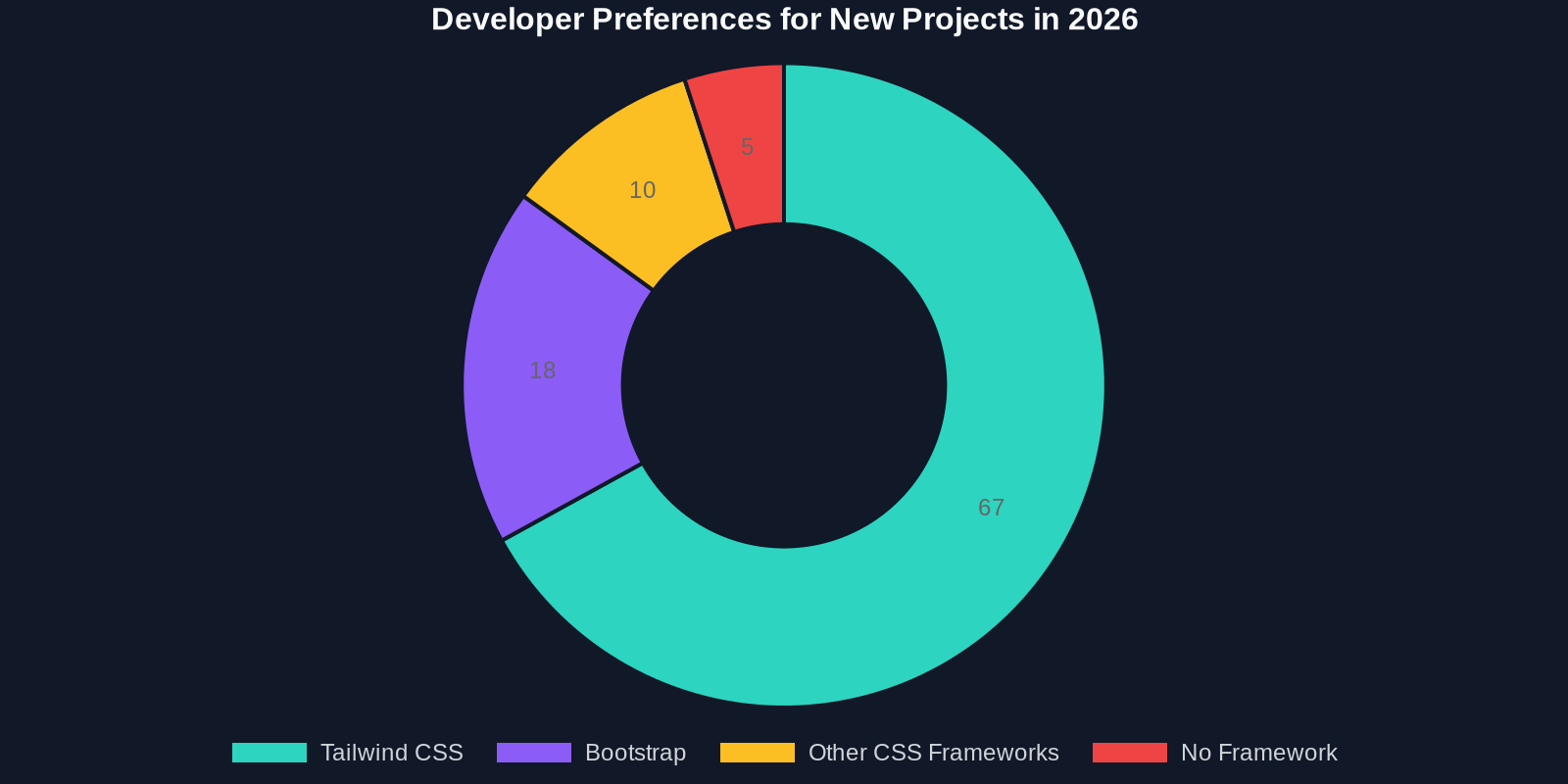
According to a 2026 JetBrains survey, 67% of developers starting a new project choose Tailwind CSS. However, 55% keep Bootstrap for existing projects.
Conclusion: The Future of CSS Frameworks
Tailwind CSS has won the battle for new development in 2026, but Bootstrap isn't dead. It's still the go-to for legacy projects or teams needing quick, accessible components. The trend is clear: utility-first CSS is the future, with frameworks like Tailwind leading the way.
Starting a new project today? Default to Tailwind CSS. You'll get better performance, more flexibility, and a growing ecosystem. But don't discard Bootstrap completely—its stability and accessibility make it perfect for enterprise dashboards and rapid prototyping.
Ready to build your next project? Start with Tailwind's official docs or try Bootstrap's starter template. Both have free resources to get you coding in minutes.