


Front-end development in 2025 is no longer just about building interfaces, it's about orchestrating intelligent, performant, and accessible user experiences at scale. The boundaries between design, development, and AI are blurring, and the tools we use are evolving faster than ever. In this deep dive, we analyze the key front-end trends shaping the industry, backed by data, real-world examples, and practical guidance for developers who want to stay ahead.
The Rise of AI-Assisted UI Development
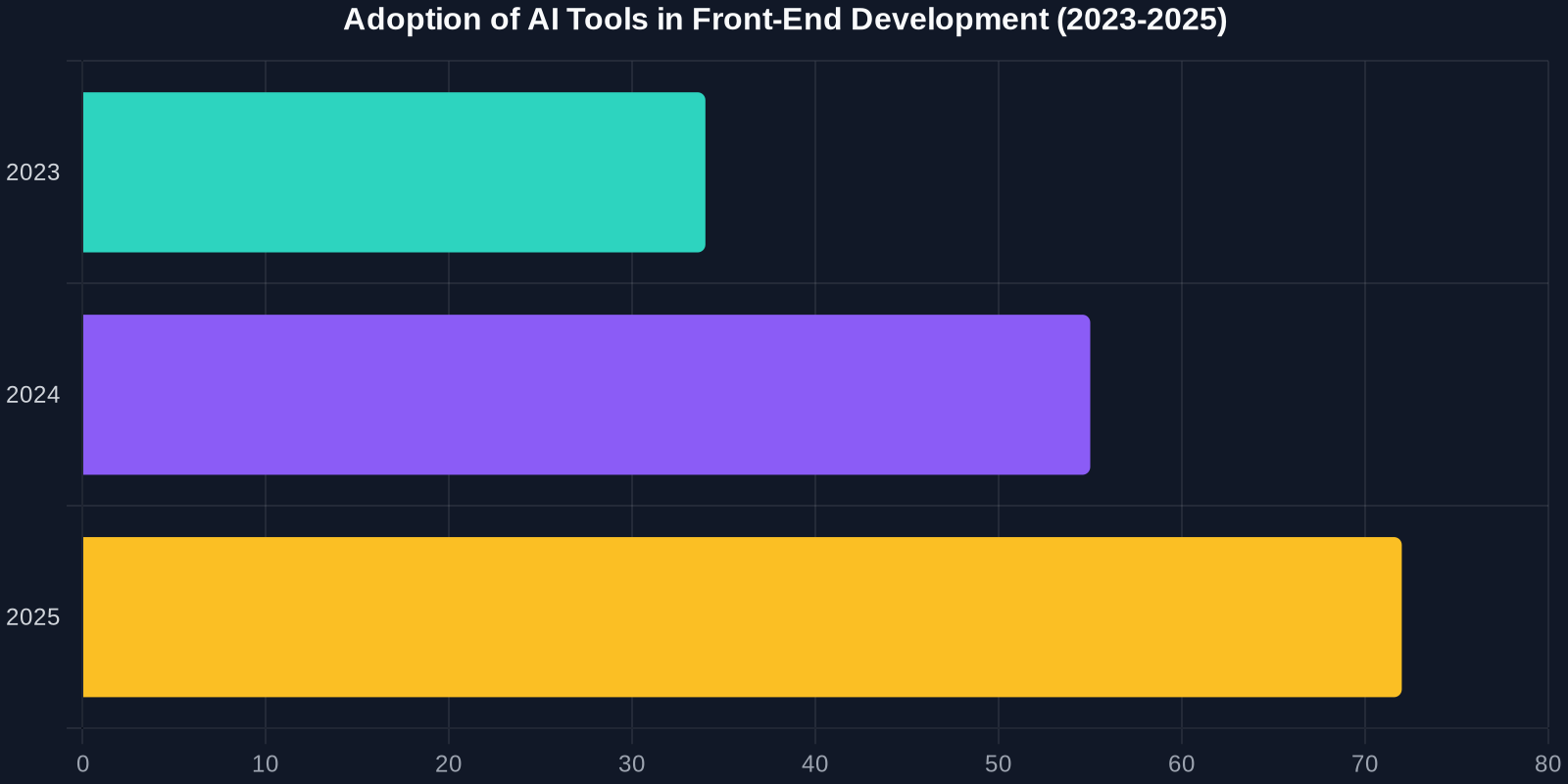
The most transformative trend of 2025 is the integration of AI into the front-end workflow. While AI code assistants have been around for a few years, the current wave focuses on generating entire UI components from natural language or visual references. Tools like GitHub Copilot, Vercel's v0, and the increasingly popular "vibecoding" paradigm allow developers to describe a UI element and get production-ready code in seconds.
Real-world application: During a recent sprint, a team at a fintech startup used DivMagic to copy a complex card layout from a competitor's site, then used an AI assistant to adapt it to their design system. This cut UI development time by 60% and reduced repetitive CSS work.
The Vibe Coding Revolution
The term "vibecoding", where developers describe the feel or "vibe" of an interface and the AI generates the code, has gained traction. It's particularly powerful for rapid prototyping and design exploration. However, it requires careful review for accessibility, performance, and semantic HTML.
Server Components and the Shift to the Edge
2025 marks the maturity of React Server Components (RSC) and their adoption beyond Next.js. The core idea is simple: run components on the server to reduce client-side JavaScript, improve initial load times, and enhance SEO. This trend is closely tied to edge computing, where server logic runs closer to the user.

Edge Rendering Takes Over
Edge platforms (Vercel Edge, Cloudflare Workers, Netlify Edge) now support server components natively. This means a component can be rendered at a data center in Sydney for an Australian user and in Frankfurt for a German user, dramatically reducing latency.
No-Code and Low-Code: Friend or Foe to Developers?
No-code platforms have evolved from simple landing page builders to sophisticated tools capable of creating full-fledged web applications. In 2025, we see a hybrid model where professional developers use no-code tools for rapid prototyping and simple interfaces, while building complex logic in code.
Micro Frontends: Scaling Teams, Not Complexity
As web applications grow, monolithic frontends become bottlenecks. Micro frontends, breaking the UI into independently deployable fragments, have transitioned from experimental to mainstream.

Sustainable Web Design: Performance Meets Planet
In 2025, sustainability is not just a buzzword, it's a development metric. Lighter pages consume less energy, and tools are emerging to measure and minimize carbon footprint.
Accessibility as a First-Class Feature
Accessibility (a11y) is no longer an afterthought. New laws in the EU and California require WCAG 2.2 compliance for many web applications. Front-end tools now bake in accessibility checks.
Trends:
- AI-powered audits, Automated analysis of color contrast, keyboard navigation, and ARIA usage.
- Design systems with a11y built-in, Component libraries like Radix UI and Headless UI enforce accessible patterns.
- Testing in CI/CD, Tools like axe-core and Lighthouse prevent regressions.
<!-- Accessible component example -->
<button aria-label="Close modal" onClick={handleClose}>
  <span aria-hidden="true">✕</span>
</button>
Conclusion: The Developer's Toolkit in 2025
Front-end development in 2025 is more powerful and more complex than ever. The top trends, AI-assisted UI, server components, edge computing, micro frontends, and sustainability, require developers to be flexible learners and strategic thinkers. The tools that help you move faster while maintaining quality are invaluable.
DivMagic is one such tool, letting you instantly copy pixel-perfect UI components from any website, inspect their code, and adapt them for your projects. In a world where UI generation is becoming automated, having the ability to copy, analyze, and customize real-world interfaces gives you a competitive edge.
"The best front-end developers don't just write code, they compose experiences from the best patterns available, adapting and optimizing for performance, accessibility, and sustainability."
Stay curious, keep learning, and let the tools handle the busywork.