
Apple Turns Safari Users into Extension Developers with AI: A New Era of On-Device Intelligence

title: "Apple Turns Safari Users into Extension Developers with AI: A New Era of On-Device Intelligence" description: "Discover how Apple's new AI-powered Safari extension development tools empower users to become developers, leveraging on-device Foundation Models for privacy-first, intelligent browsing experiences."
Apple Turns Safari Users into Extension Developers with AI: A New Era of On-Device Intelligence
At the 2025 Worldwide Developers Conference (WWDC), Apple unveiled a groundbreaking shift in its AI strategy that is set to redefine how users interact with Safari. Instead of rolling out broad, sweeping AI integrations across its ecosystem, Apple is taking a more focused approach: turning Safari users into extension developers with AI. This move leverages Apple's on-device Foundation Models, enabling third-party developers—and even everyday users—to create intelligent, privacy-preserving browser extensions that were previously the domain of large engineering teams.
This approach has several advantages:
- Privacy: User data never leaves the device, reducing exposure to breaches.
- Speed: On-device inference eliminates latency from cloud calls.
- Offline Capability: Extensions work even without an internet connection.
- Cost Efficiency: No server costs for developers or users.
How Safari Extensions Are Evolving
Traditionally, Safari extensions were limited to simple tasks like ad blocking or password management. With AI, extensions can now perform complex operations such as:
- Real-time language translation
- Intelligent content summarization
- Contextual search assistance
- Personalized shopping recommendations
- Automated form filling with natural language understanding
This on-screen awareness is a game-changer for Safari extensions. Imagine an extension that can read the content of a webpage and offer contextual actions—like summarizing a long article, translating a foreign language paragraph, or extracting key data points—all without sending data to the cloud.
Key Features of Apple Foundation Models for Safari
- Natural Language Understanding: Extensions can interpret user queries in plain English.
- Contextual Awareness: Models understand the current webpage context.
- Multimodal Capabilities: Support for text, images, and audio inputs.
- Privacy-Preserving Architecture: All processing happens on-device.
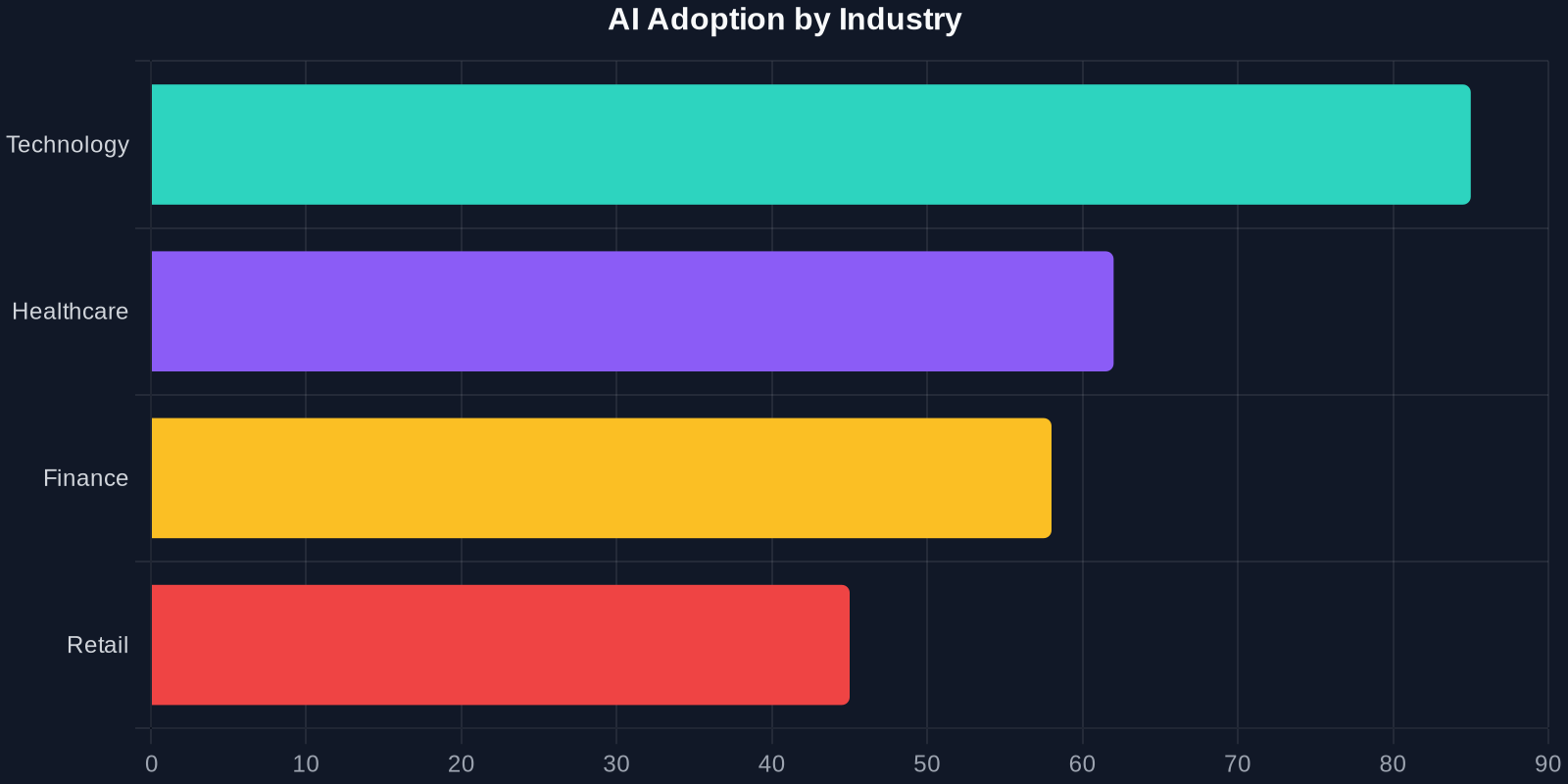
This chart illustrates how different industries are adopting AI, with technology leading at 85%. Apple's on-device approach is particularly appealing to healthcare and finance sectors, where data privacy is paramount.
How Users Can Become Extension Developers
Apple's new initiative is not just for professional developers. The company has introduced a visual extension builder within Safari's settings, allowing users to create simple AI-powered extensions without writing code. This tool uses a drag-and-drop interface where users can:
- Select a trigger: Choose when the extension activates (e.g., on page load, on click).
- Define an action: Pick from pre-built AI tasks like summarization, translation, or sentiment analysis.
- Customize output: Adjust the format and length of the response.
For more advanced users, Apple provides a JavaScript API that directly interfaces with the Foundation Models. This allows for custom logic and integration with other web services.
Example: Building a Smart Bookmark Extension
Let's walk through a simple example. Suppose you want an extension that automatically tags bookmarks with AI-generated keywords. Here's how you'd do it:
- Create a new extension using the visual builder.
- Set the trigger to "When bookmarking a page."
- Choose the action "Generate keywords using AI."
- Save and test the extension.
The extension will use the Foundation Model to analyze the page content and suggest relevant tags, all stored locally.
Privacy and Security: Apple's Competitive Advantage
In an era where data breaches are commonplace, Apple's commitment to privacy is a significant differentiator. By keeping AI processing on-device, Apple ensures that user data remains under their control. This is especially critical for Safari extensions, which often have access to browsing history and page content.

New Opportunities for Developers
- Monetization: Developers can sell their extensions on the Mac App Store or offer in-app purchases.
- Cross-Platform: Extensions built for Safari can also work on iOS and iPadOS with minimal changes.
- Community: Apple has launched a dedicated developer forum and sample code repository.
The Future of Safari and AI
Apple's move to turn Safari users into extension developers with AI is just the beginning. At WWDC 2025, Apple also unveiled a new design language called Liquid Glass, which integrates AI systems and user interaction into a seamless experience. This suggests that AI will become even more embedded in future versions of Safari and macOS.
Predictions for 2026 and Beyond
- Conversational Siri: Apple is stepping up its AI game with a new version of Siri powered by advanced large language models (LLMs). This conversational Siri, set to launch in 2026, will integrate deeply with Safari extensions.
- Spatial Reframing: New features like Spatial Reframing will allow extensions to adapt content for AR/VR environments.
- Cross-Device Continuity: Extensions will seamlessly work across iPhone, iPad, Mac, and Vision Pro.
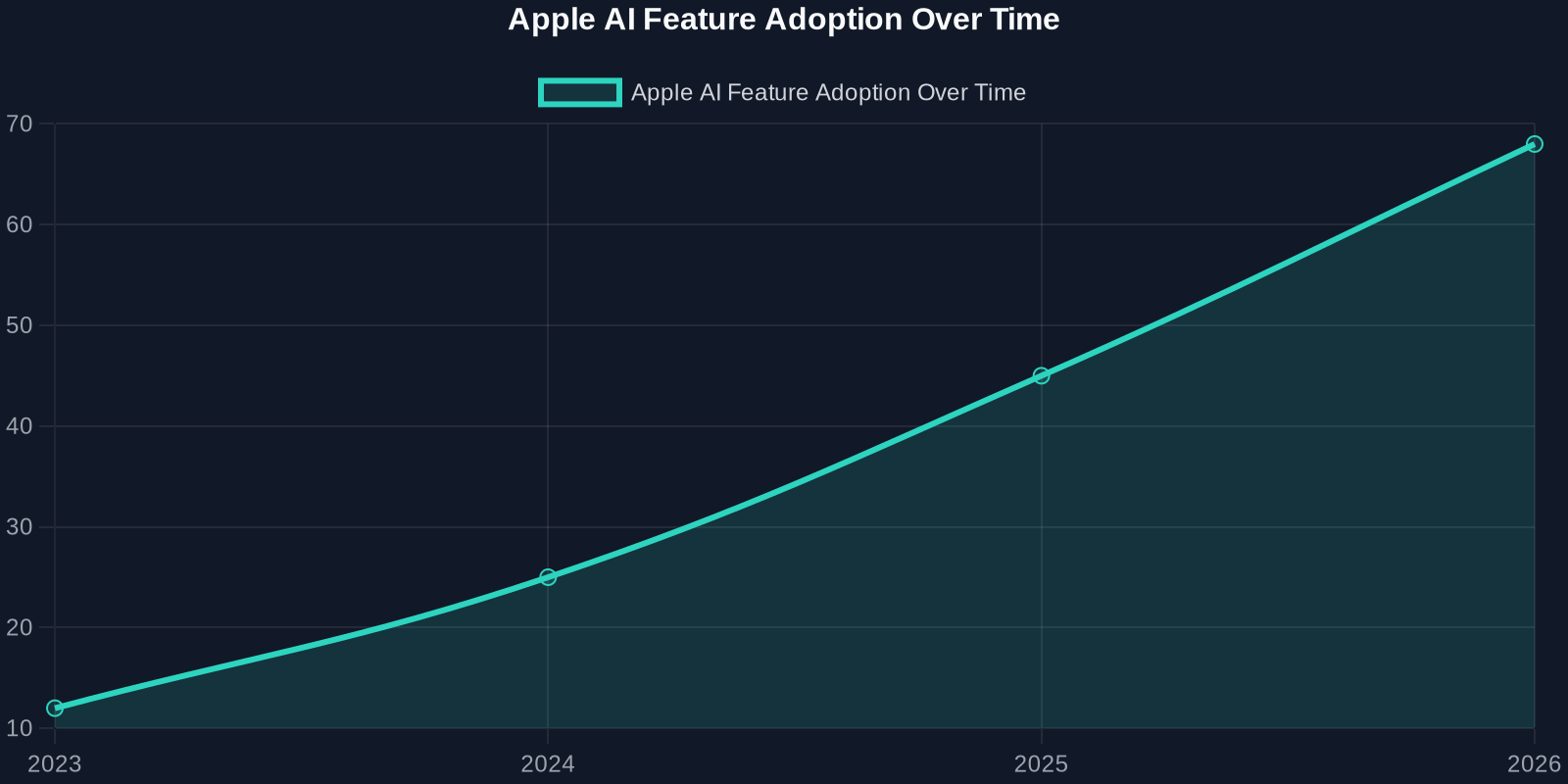
This line chart shows the projected adoption of Apple AI features over time, with a sharp increase expected after the launch of conversational Siri in 2026.
Key Takeaways
As Apple continues to integrate AI across its devices and apps, the line between user and developer will blur, creating a more personalized and secure digital world. The future of browsing is here, and it's powered by you.
For more insights on Apple's AI strategy, check out our related articles on Apple Intelligence and WWDC 2025 Highlights.